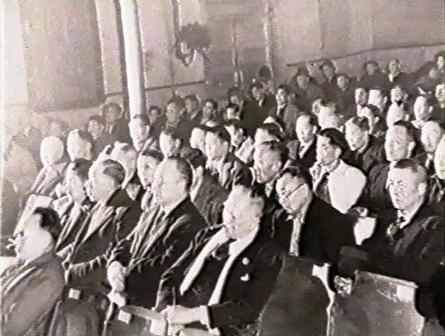
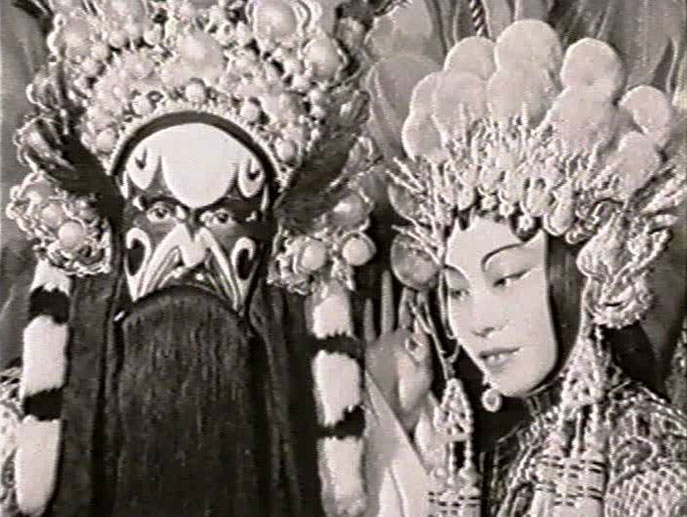
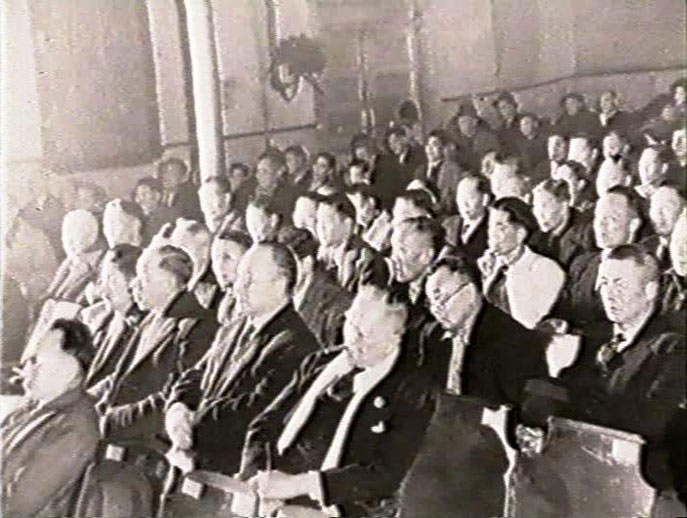
The fascinating silent amateur film clip shown above documents a Cantonese opera performance in Vancouver, 80 years ago. Local filmmaker Oscar C. Burritt (1908-1974) shot it on February 8, 1944.
Mr. Burritt filmed the performance from the audience seats, in at least three different camera positions. In these edited excerpts above, the first section (0:10 – 1:31) appears to have been filmed from the front row of the theatre. The major characters are recorded, along with some telling facial expressions—but the the lens is almost too close to the action. The actors often crowd the edge of the frame, and when they work downstage, they tower over the camera. Because of the low light levels, the lens’s depth of field is extremely shallow, resulting in some rather soft-focused shots.
Burritt changes position, taking a single too-brief shot of the view from the balcony seats (1:32 – 1:35). He then moves to the right side of the auditorium, where he has a better angle on the action. The film ends abruptly as two actresses seem to step out for their curtain call (2:14). The onstage orchestra is seen briefly (at 0:53 and 1:50), and there are a few glimpses of people looking on from backstage (at 0:40 and 1:41).
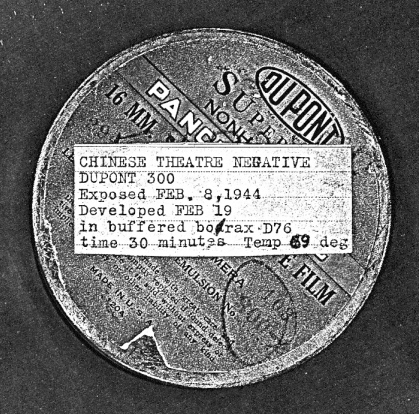
Besides shooting this unique footage, Burritt also processed the exposed film himself, probably using a homemade rack in his bathtub. He recorded the processing details on the original film container, shown below:
Twenty-five years later, when Oscar Burritt was working for CBC Toronto, he presented classic feature film screenings on the television program Cinema Six. In his introduction to Orson Welles’ The Lady from Shanghai (1948), he talked about his personal interest in Chinese opera:
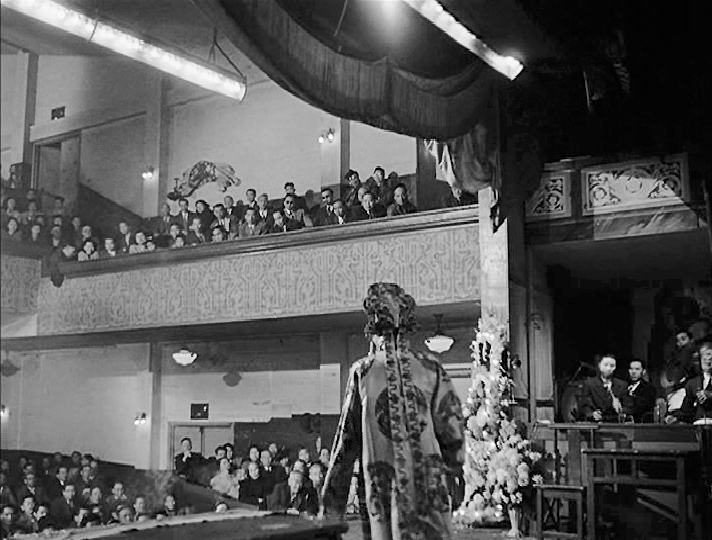
One of the things in this film which you will find unique, because it doesn’t seem to exist anymore: when the sailor escapes from the courtroom and runs away, he runs into San Francisco’s Chinatown – which is, like that of Vancouver, gradually receding into the past. And so the sailor hides in the theatre, and you see the performance on the stage. Now, this was of particular interest to me because, when I grew up in Vancouver, we had three theatres in the Cantonese tongue. I have here a few pictures which you might like to see, of some of the great stars of the past of the Chinese opera. . . .
V1990:06/001.02 item #2, Royal BC Museum)
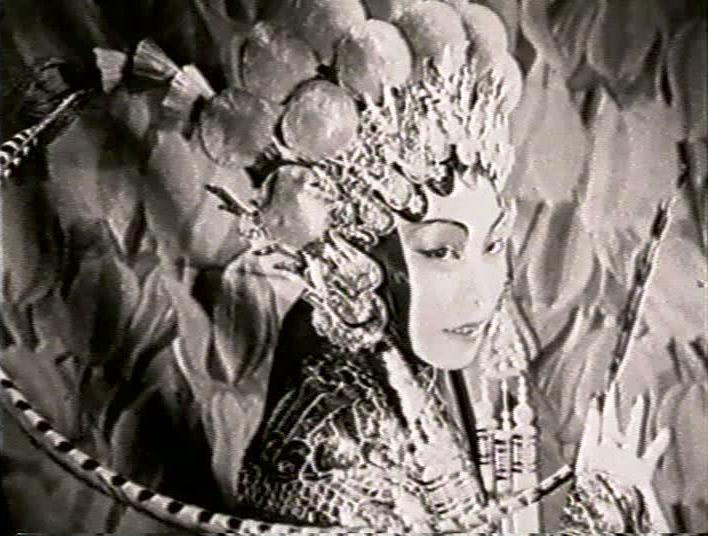
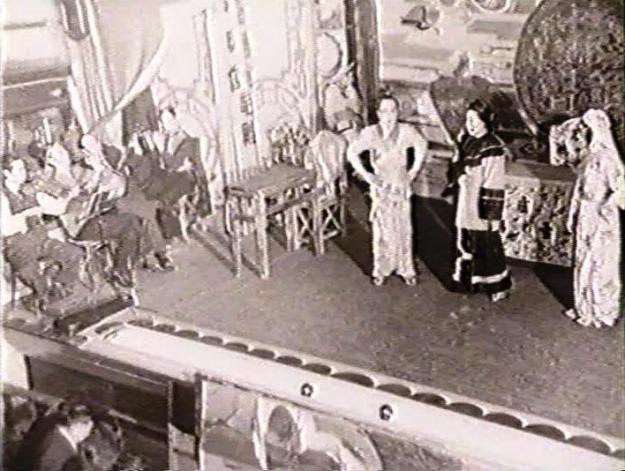
These [photos] were taken in the theatre at the foot of Columbia [Avenue] in Vancouver, which no longer exists, of course. So, when we look at Lady from Shanghai, we can remember that it shows things that are even now disappearing.*
*Note: These comments, like the above images (which show still photographs taken by Mr. Burritt) are from the film clip “[Oscar C. Burritt introduces The Lady from Shanghai]” (CBC, 1969), V1990:06/001.02 item #2, description AAAA2510, BC Archives.
Assuming that Oscar shot his film in the same place he took the above photographs, his footage shows the interior of the Jin Wah Sing Theatre at 546 Columbia, between East Pender and Keefer. On the other hand, The British Columbia and Yukon Directory, 1944 (p.1336) indicates that this theatre was “not operating” in 1944—and throughout the Second World War, in fact. In earlier years, the building had been known as the Sing Ping Theatre and the Orient Theatre.
According to Robert Trio of the Hong Kong Maritime Museum, the banners or curtains seen behind the actors in some shots indicate that the opera was being staged by the Jin Wah Sing Theatre (振華聲劇團) , and featured Gui Mingyang (桂名揚), Wen Huamei (文華妹), and Lu Xuehong (盧雪鴻) in the cast.
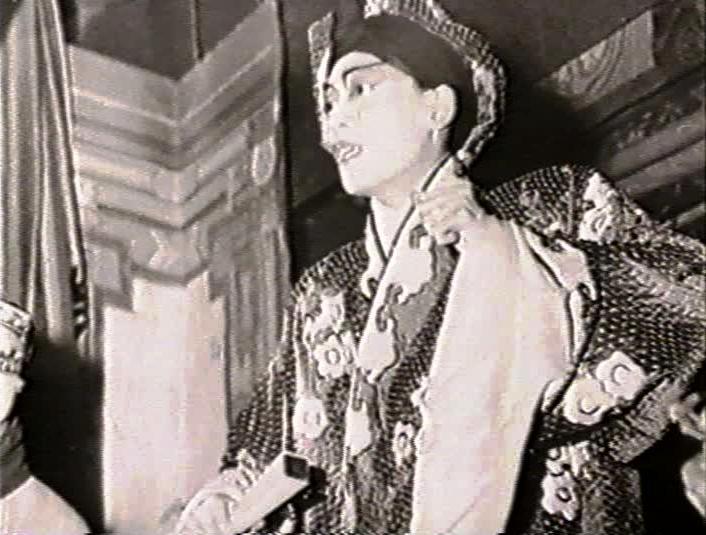
Commenting on the photo above, Oscar (clearly an aficionado) said: “This star is Gui Mingyang, who would be one of the greatest, probably, next to Mei Lanfang—who was considered by many to be the greatest, although I don’t necessarily agree.” (This is another quote from “[Oscar C. Burritt introduces The Lady from Shanghai].”)
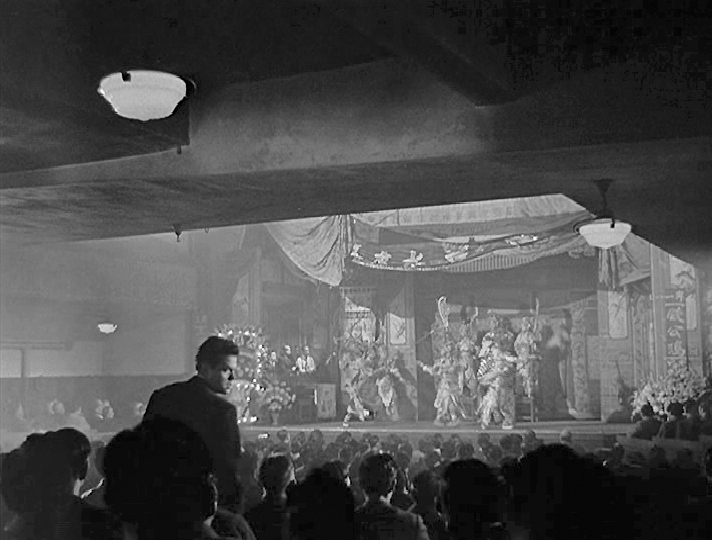
In describing Orson Welles’ classic film noir to his CBC TV audience, Oscar was referring to the film’s Chinese theatre sequence, shot at San Francisco’s Mandarin Theatre. Here are two stills from that sequence, which I found at the website ReelSF: San Francisco movie locations from classic films.
[My original article about Oscar Burritt’s Chinese theatre film appeared in the Royal BC Museum’s short-lived online publication Curious, no. 1 (Winter 2014).]
UPDATE: When I first posted this item on social media some years ago, a reader sent me some text in Chinese. Running it through an online translation program, I now see that it seems to be from a newspaper review of the performance.
1944.02.08, Taihan Gazette: Overseas Chinese Drama Troupe is a delightful evening with Melanie Mui and M.Y. Kwai in the Monk’s Cave scene. “The Monk’s Bridal Chamber” starring Gui Ming-yeung and Mei Lan-hyang on Tuesday night.


 Seriously Moving Images
Leave a comment