” . . . love, and the imminence of love, and intolerable remembering . . . ” — Jorge Luis Borges, “Matthew 25:30”
In 1946, four members of the Vancouver film community (yes, there was one, even then) visited their favourite place on the BC coast: Galiano Island. They shot some 16-millimetre film there (as you do). At some point, the one colour roll (Kodachrome) and two black-and-white rolls (Ansco and Dupont) were spliced together onto a single reel for ease of projection. It’s survived in that state for 79 years. Halfway through that period, the reel was donated to the British Columbia Archives as part of the Oscar and Dorothy Burritt film collection.
What does it all mean?
In 1987, when the Oscar and Dorothy Burritt films arrived at the BC Archives (as a potential donation from Mrs. S. J. Burritt and family of Burnaby), I peeked into the shipping carton with curiosity. I had already seen their films “and-“ and Three There on VHS reference copies sent from Library and Archives Canada — as well as Suite Two: A Memo to Oscar (1947), which the BC Archives had acquired and restored in 1986.
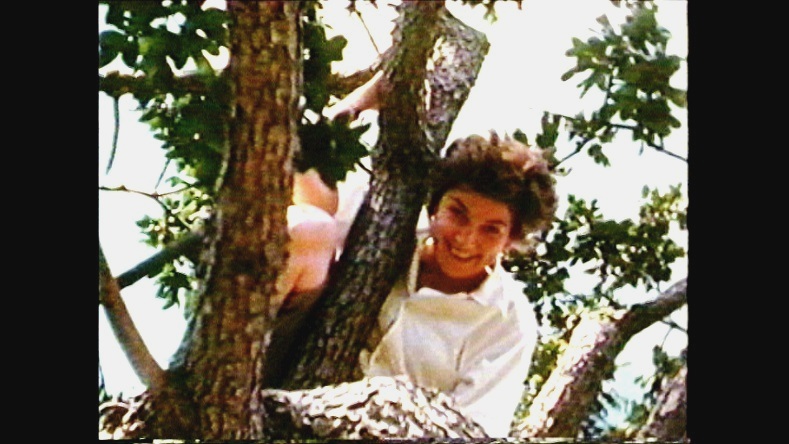
I selected a film reel from a can labelled “When Oscar Came Home – 1946 at Galiano,” and threaded it up a on the Zeiss Ikon Moviscop film viewer in the office. After the requisite flash frames, I found a wonderful colour sequence of a woman climbing a gnarled tree on Galiano. I was hooked. The first thing that popped into my head was the the first line of the Fifth Elegy, in Rilke’s Duino Elegies (1923): “But tell me, who are they, these acrobats . . . ? “1
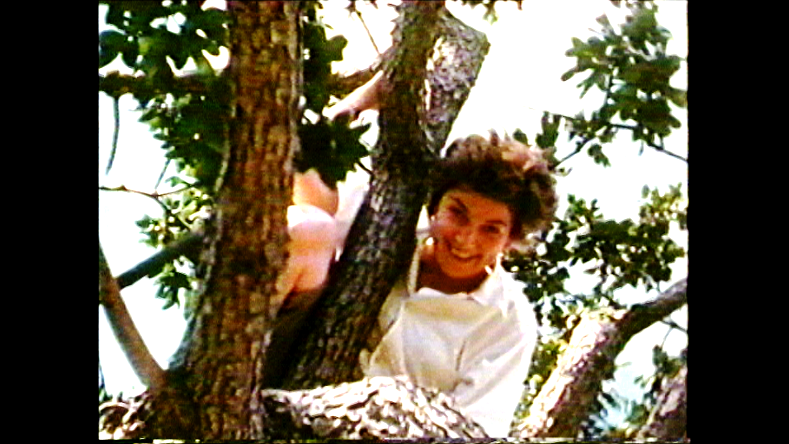
The acrobat (in this case) was Maureen Balfe. I examined the Burritt film collection very closely, and I learned more about the their milieu by interviewing Stanley Fox in 1988.
[Dorothy] dressed in an “arty” way; lots of flowing things, and almost always sandals on her feet. “Early hippie,” sort of. In fact, that group essentially would have been, in later years, either beatniks or hippies — whatever you could call people of that period. They were “pre-beatnik” beatniks.
There certainly weren’t any drugs or anything like that. Nevertheless, the mental attitude was somewhat similar.There was the political rebellion, as well as the artistic; it was blended together. They were “individualists,” in every category.
— Stan Fox interviewed by D. J. Duffy, 20 June 1988
“But tell me, who are they, these acrobats?”
Well, Moira Armour worked for the Vancouver Public Library at Main and Hastings. When their Fine Arts Division started a film library in January 1946, Moira was hired to take charge of the service.2 Maureen Balfe was a film editor at Vancouver Motion Pictures Ltd. (VMP), then the city’s foremost production house.3 Dorothy Burritt was a film society organizer. In 1946, Dorothy and Moira were working to create the postwar Film Survey Group of the Labor Arts Guild, a worthy enterprise that brought over sixty foreign, classic, and silent films to Vancouver audiences. Oscar Burritt, Dorothy’s husband, was a director and cinematographer for VMP, directing films for the National Film Board and commercial clients. I suspect that the four of them had met in the late 1930s as members of the Vancouver Branch of the National Film Society.
On another visit to the island, six years before “When Oscar Came Home,” Oscar and Dorothy (with another friend, Margaret Roberts) had made a unique personal record of their sojourn — Three There: Galiano Island 1940.
“The one in the braces–HE done it!”
I’ve been aware of “When Oscar Came Home” for (lordy!) 38 years, and recently I decided that it was time to do something with it. I’m a film editor at heart. I have a VHS copy of the BC Archives’ video master, which I digitized many moons ago.
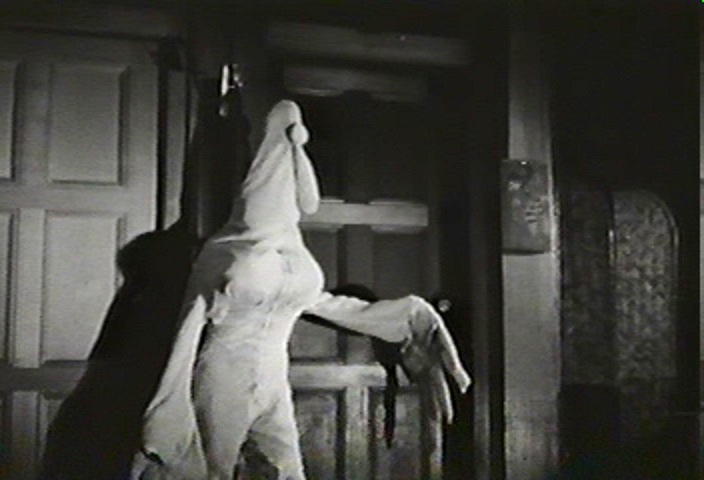
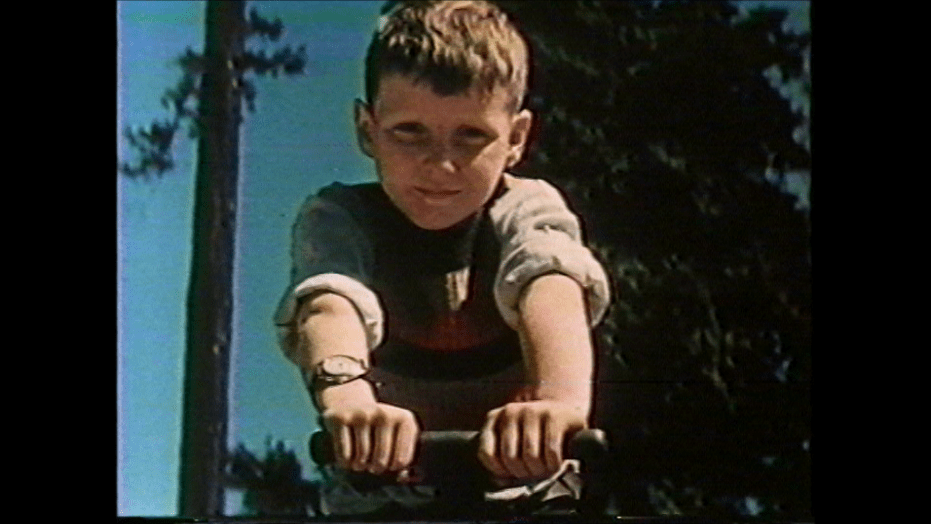
My editing plan was simple. I pulled together all the scenes on the same topic, placing the colour footage (shot mainly by Oscar) beside the corresponding B&W footage (shot mainly by Dorothy). I ended up with nine topical sections, which I then named and numbered. Then I trimmed out most of the unintended artifacts of shooting: flash frames (from camera starts), too-short shots, sections of blank or black film, etc. I decided to retain the footage with orange light-struck edges; these occur when a daylight spool of colour film gets exposed to too much daylight, as seen in “Maureen Conquers a Tree.” (I thought it looked cool.)
Some of the B&W footage was badly underexposed, or exhibited signs of home-processing problems. For this footage, I simply cranked the light levels in the video up (or down) until I could see something. This is especially noticeable in sections 8 and 9, which are also badly scratched. (Possibly from a camera malfunction.) I like both of these sequences, because they are so ephemeral; the image is hardly present on the film at all.
I enjoy the placid sequence of ducks at Lost Lagoon; it was shot very near the Burritt’s apartment at 1960 Robson Street, northwest of Denman near Chilco Street. I especially like the scene of Maureen Balfe pouring drinks for Moira Armour across the counter in the editing area at VMP. (You can see the racks of film cans and reels behind Maureen.)
After the Second World War, VMP became Shelley Films, and the operation moved east to Ontario. The 1946 Galiano trip happened when Oscar came home from Toronto, where he was helping set up the company’s facilities. The Burritts moved to Toronto in late 1947. Moira and Maureen eventually moved there, too.
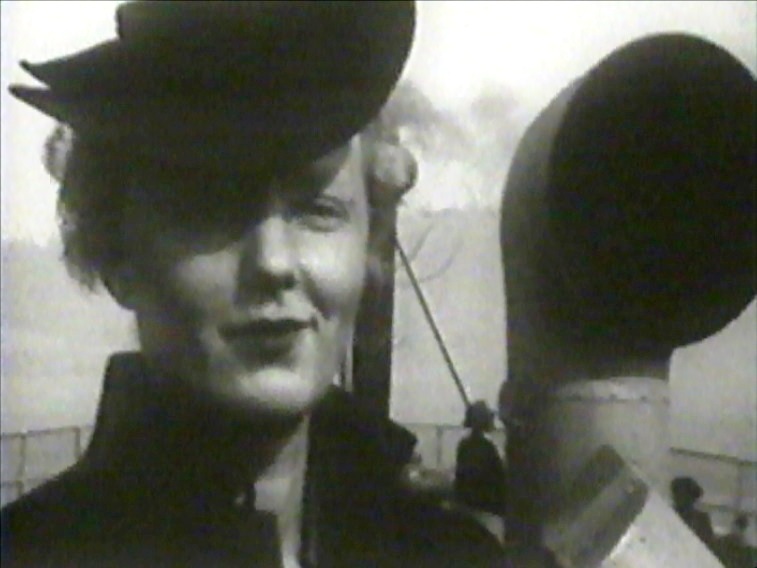
It seems to me that, more than anything else, When Oscar Came Home is a film about friendship. And about youth, in a way.4 But it’s also about the pleasures of making pictures; climbing trees; drinking wine through straws; going on steamship excursions, and sunning yourselves on the top deck. And peering into the eyes of seagulls as they soar past you.
“A Lot of Arty-Farty Nonsense”
In 1989, I went back at SFU to finish my BA. I proposed a video documentary about art, cinema, and the meaning of life, based on the Burritt footage. A mini-grant from Video In covered the cost of videotape and equipment rentals. My SFU instructor approved the proposal, but he was somewhat skeptical. We were chatting one day and he suddenly asked, “What’s the deal with you and these dead women, Dennis?” (Wow. I didn’t know how to answer that!)
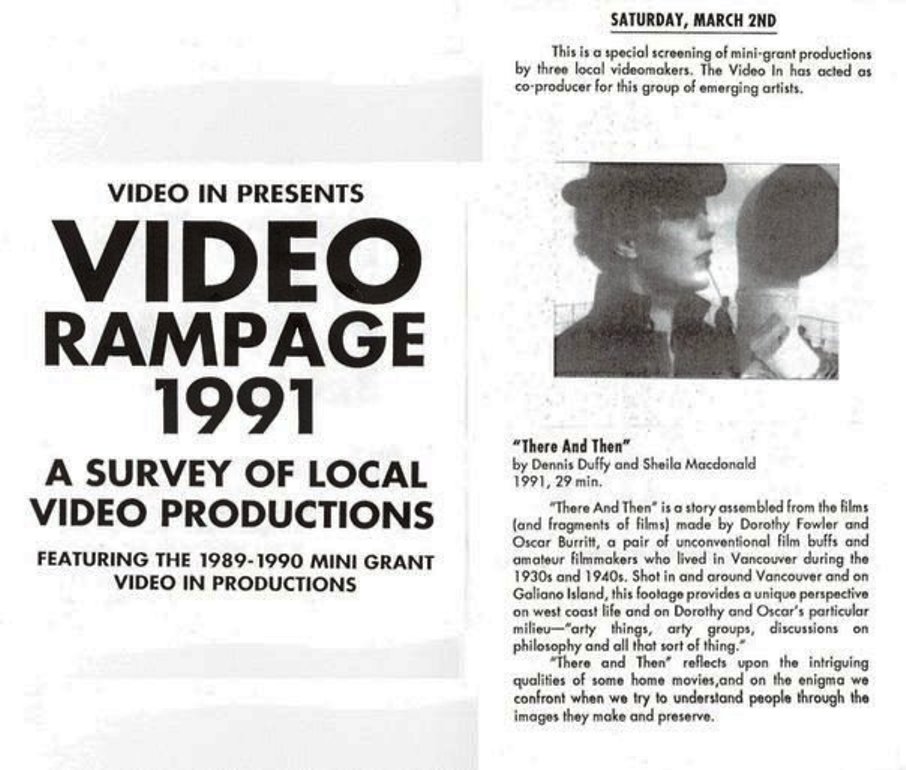
I completed my video documentary, There and Then, far enough to satisfy the terms of the Video In grant and my course credit at SFU. But I was never really happy with how it turned out.
Seriously Moving Images
Now, three decades later, I have this blog. Over the past year and a half, I’ve been editing Dorothy and Oscar’s films and presenting them here; letting the films tell their own stories–like I should have done in the first place.
From the carton I peeked into in 1987–along with Burritt films from other sources–I’ve posted the following films and blog entries:
- May 1, 1938: Vancouverites march for a better world (May 1938)
- The Pier D Fire (July 1938)
- Stanley Park (Coast Films, 1939)
- Sunday Afternoons at the Stanley Theatre with Oscar Burritt (April 1940)
- Bats Out of Hell (July 1940)
- Three There: Galiano Island 1940 : [complete film] (ca. Sept. 1940)
- “and-“ (ca. 1940-41)
- A Fan of the Chinese Opera (Feb. 1944)
- “A cedar panelled billiard room”: Suite 2, 1960 Robson Street, Vancouver (June 1947)
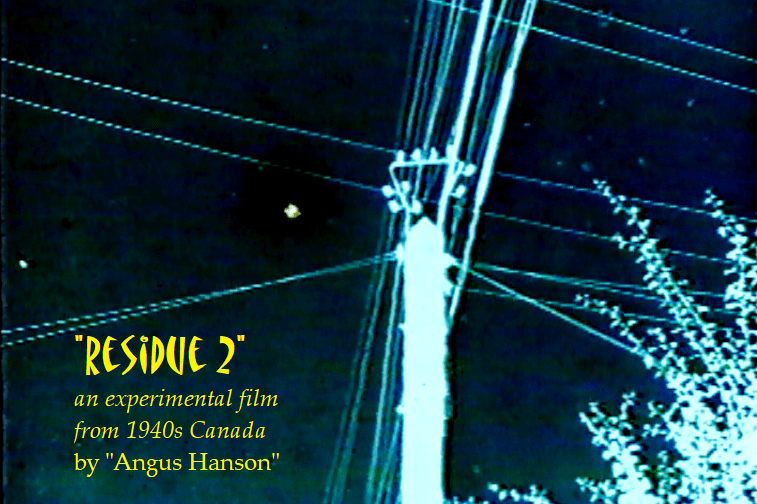
- Residue 2 (194-?)
- “Evangelists”: The Other Cinema of Dorothy and Oscar Burritt (2016-19)
- A Museum Happy Hour: Jamming in “Old Town” with Dorothy, Stanley, Ora, and Aimee (2019)
[I’ve just added a full-length blog entry for Suite Two: A Memo to Oscar (June 1947), entitled “A cedar panelled billiard room.” Check it out here.
Notes
- “So, Dennis, you’re actually familiar with the work of Rainer Maria Rilke?”
“Well, I know the Duino Elegies.”
“Really?”
“Okay, I know the Fifth Duino Elegy.”
“How well?”
“I know the stuff about the acrobats and the Picasso painting.” (“Family of Saltimbanques,” 1905.)
“I see. And what about Jorge Luis Borges?”
“Same deal, really. But oh, I just remembered! W. H. Auden once called Rilke “the Santa Claus of loneliness.”
“Nice one.” ↩︎ - British Columbia Library Association Newsletter, 9:2 (January 1946), p. 9. Moira Armour was a lifelong labour and women’s rights activist. In the 1970s, she was a film librarian and archivist at the Toronto Board of Education, where she co-directed the films Learning to Read Between the Stereotypes (1974), Is Anybody Out There Listening? A Study of Sexism in High Schools, and A Woman’s Work is Never Done. She was also a cinematographer on Don’t Call Me Baby (Canadian Union of Public Employees, 1975). Armour went on to become an executive at the CBC–and to curate the Hornby Island Arts Festival. She was also the co-author of Canadian Women in History: A Chronology (Green Dragon Press, 1990-92). Moira died on Hornby Island on 13 April 2004, aged 83. According to a Globe & Mail obituary, “she lived a courageous and productive life – generous, committed, a feminist, a peace activist, an ardent believer in social justice.” ↩︎
- Maureen Balfe edited Vancouver Diamond Jubilee (Trans-Canada Films, 1947) and several NFB films, including Snow Goose (1952), Point Pelee: Nature Sanctuary (1953), The World at Your Feet (1953), Harvest in the Valley (1955), Chemical Conquest (1956), Wildlife in the Rockies (1957), Tourist Go Home (1959), and Interview with Linus Pauling (1960). She was editor and co-director of World in a Marsh [aka The Lively Pond] (NFB, 1955/56). Maureen died in Montreal on 15 January 1981. ↩︎
- In 1946, Oscar was 38 and Dorothy 36; Maureen and Moira were probably 25 or 26. ↩︎

 Seriously Moving Images
Leave a comment