A hundred years ago, one of Canada’s first government film agencies was enjoying the first summer of its short life.
The British Columbia Patriotic and Educational Picture Service (PEPS), created by the BC government in April 1920, began releasing films on BC subjects that June. These were mainly films about the province’s resources and industries, as well as “scenics” (travelogues) and occasional entertainment shorts. They were largely the work of Vancouver cinematographer A.D. “Cowboy” Kean (1882-1961), the first British Columbian to make a living as a filmmaker.
The PEPS films were sent out to exhibitors, free of charge, for screening in the province’s movie houses. But there was a catch. Under the legislation creating the PEPS, all licensed movie theatres in BC were required to include the PEPS-issued films in every screening, up to a maximum of 15 minutes per show. The mandatory screening provision was controversial; audiences supposedly complained about the government films, and exhibitors pushed back against the requirement.
Some of the early PEPS pictures seem to have had technical quality issues, and the trade journal Canadian Moving Picture Digest [20 Sept. 1920, p. 40] claimed: “The BC government continues to wish its educational film on the long-suffering public. The film is good in every detail except photography, subtitles and editing.”
As time went on, however, it sounds like the films got better and more interesting; they certainly met with more acceptance from audiences. Kean spent July and August travelling all over southern BC to shoot new material for PEPS releases. At the end of August, the Vancouver Sun reported the pending release of three new films.
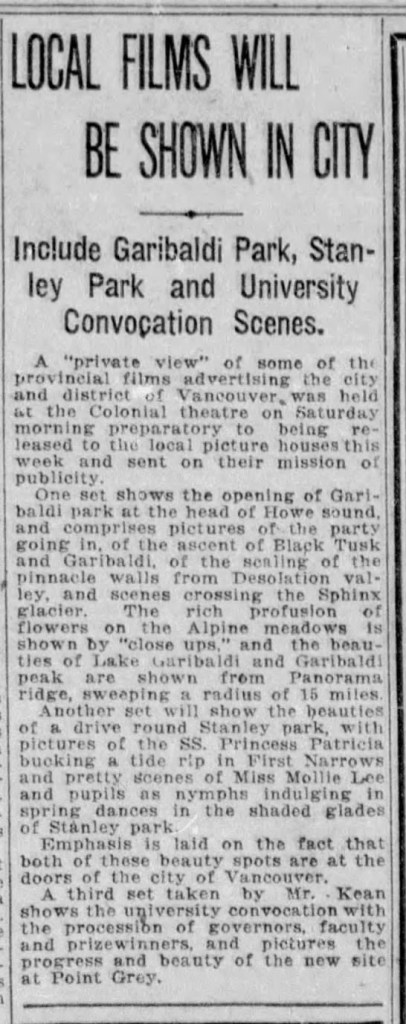
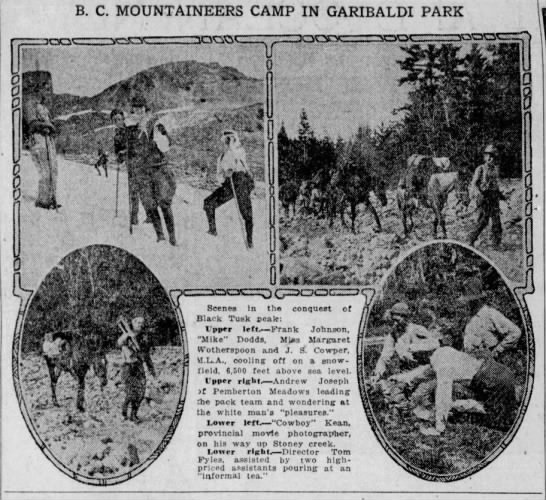
The first film listed by the Sun showed members of the BC Mountaineering Club camping and climbing in the newly-created Garibaldi Park above Howe Sound. Billed as Glorious Garibaldi Park, it premiered at Vancouver’s Colonial Theatre on August 30 with a “Northern” adventure feature, The Valley of Doubt.

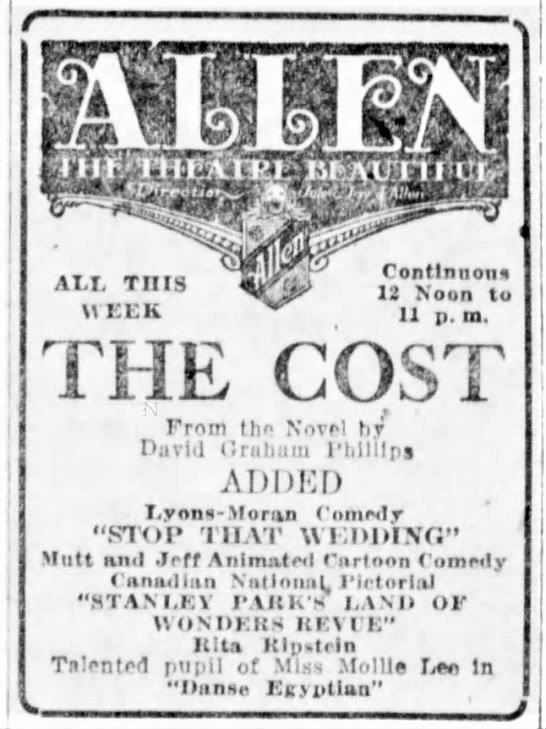
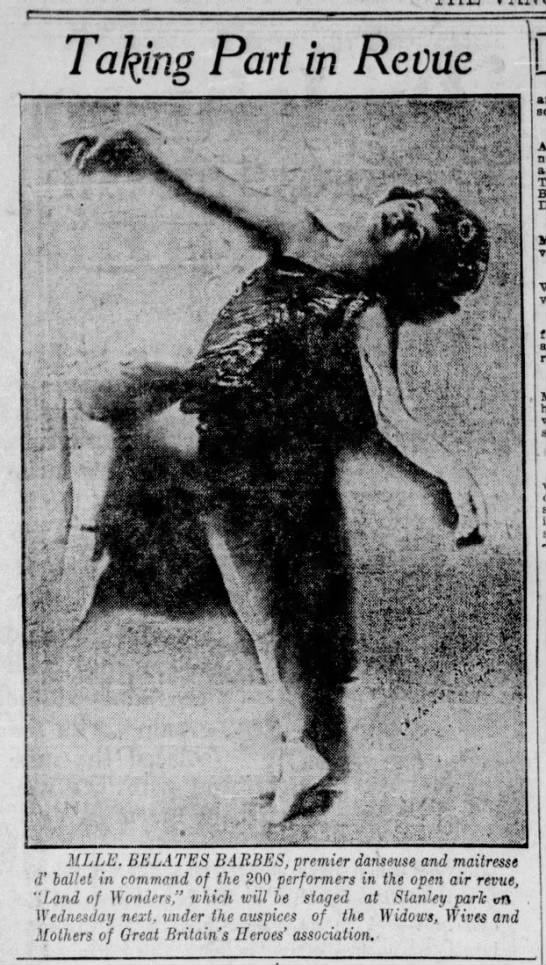
The second film, known as The Land of Wonders Review and Stanley Park, featured local dancers rehearsing in Stanley Park for an upcoming performance there. The dance pageant was directed by Mlle. Violet Belates-Barbes, who ran a dance school in Vancouver’s West End. Kean’s film, showing the park and the dancers, opened at the Allen Theatre on August 30, billed with a feature film called The Cost. The short proved so popular that it played there for two full weeks, even after the feature was replaced. The theatre manager reported that audience members had actually applauded a scene in Land of Wonders Review.
The third film showed the latest convocation of the University of British Columbia, along with the scenery and construction in progress at the new UBC site.
As with most of the pictures produced by PEPS, unfortunately, these films no longer exist. The picture service, which soon become mired in a political controversy, suffered budget cutbacks in early 1922, and essentially ceased production by mid-1923. The films were cut, re-edited, re-purposed–and eventually lost or destroyed.
Kean had begun making films in 1914, and some of the his pre-1920 efforts were picked up by PEPS for wider release. One notable example is an excellent documentary on whaling; he initially produced it in 1916, then augmented it with newly-shot footage each year until 1919. It is preserved today, in its PEPS version, as Whaling: British Columbia’s Least Known and Most Romantic Industry.



 Seriously Moving Images
Leave a reply to A. D. Kean and “Range Days” | Seriously Moving Images Cancel reply