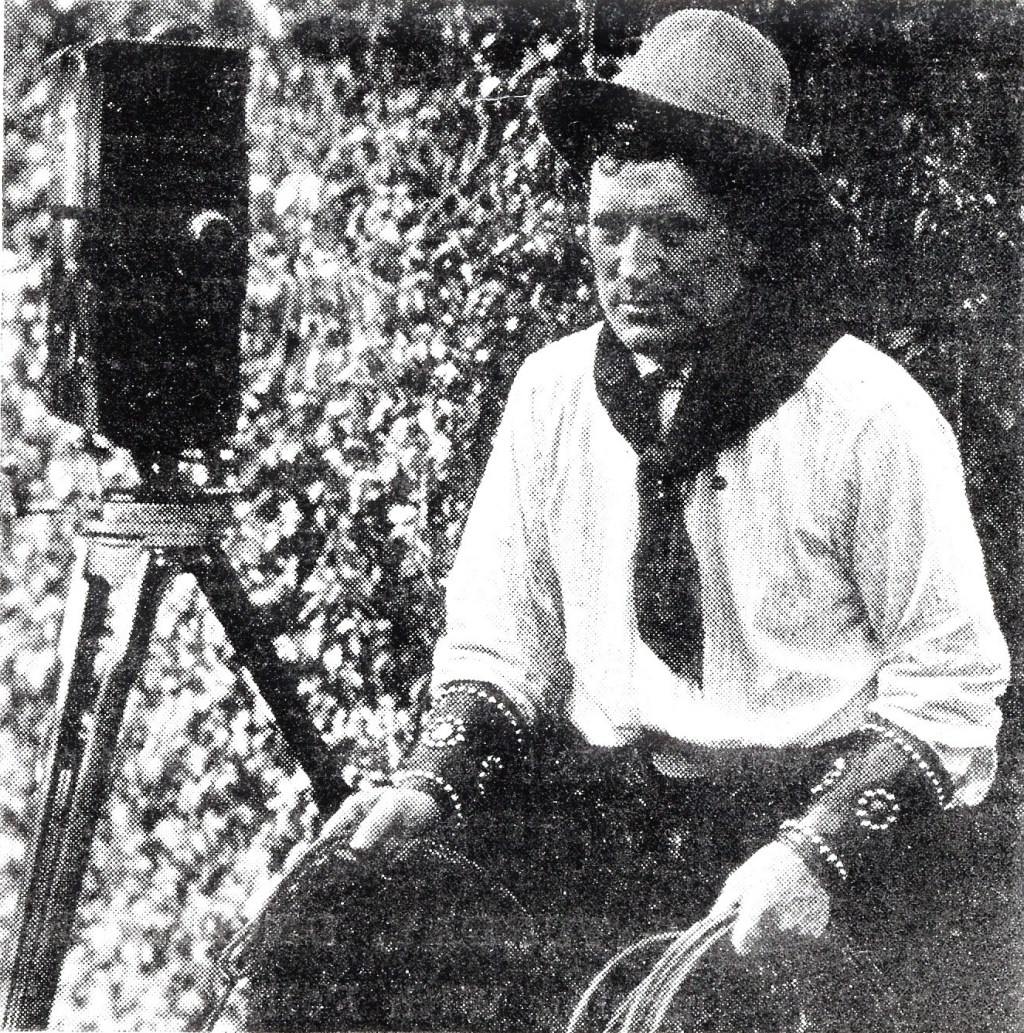
In late March 1924, an all-Canadian feature film began shooting at Green Lake, near 70 Mile House, BC. The Western Pictures Company of Vancouver was shooting winter scenes for Policing the Plains, a historical docudrama about the early days of the North West Mounted Police. The film was based on the book of the same name by the Reverend R. G. MacBeth, a Presbyterian minister who also wrote popular accounts of Canadian history.
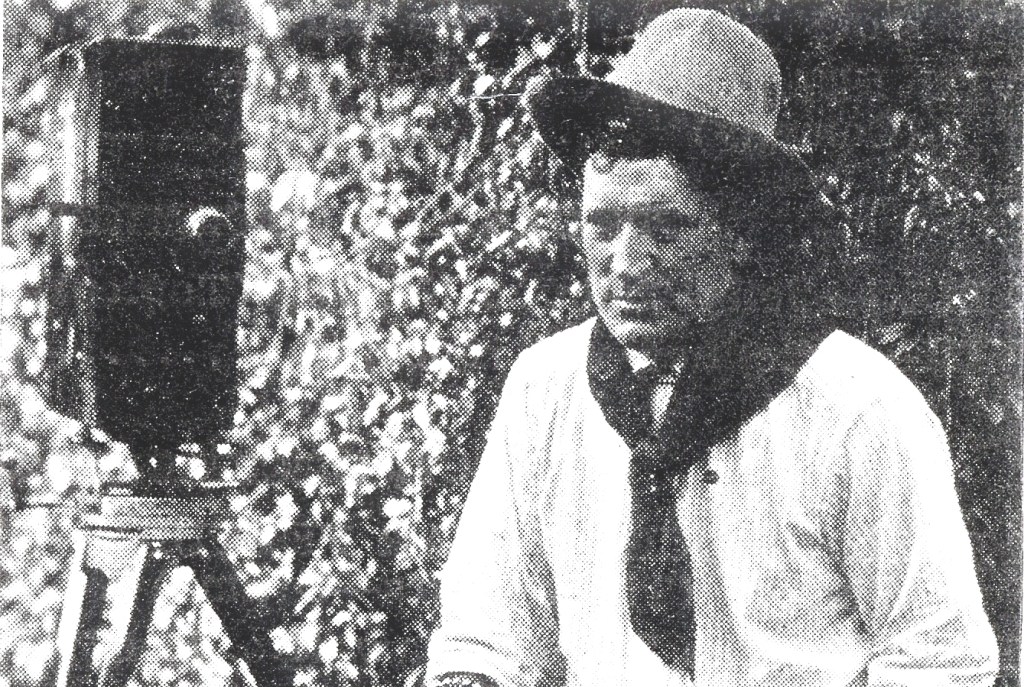
The driving force behind the project was A. D. “Cowboy” Kean (1882-1961), who served as screenwriter, director, producer, cinematographer, film editor, and publicist. Kean began his motion picture career in Vancouver in 1914, and was the first BC resident to earn a living making films.
Kean’s small company of cowboys and horses set up shop at Jack Boyd’s ranch on Green Lake. Boyd (1895-1966), a champion rodeo competitor, was cast in the film’s lead role, which called for him to wear the uniform of an NWMP sergeant.
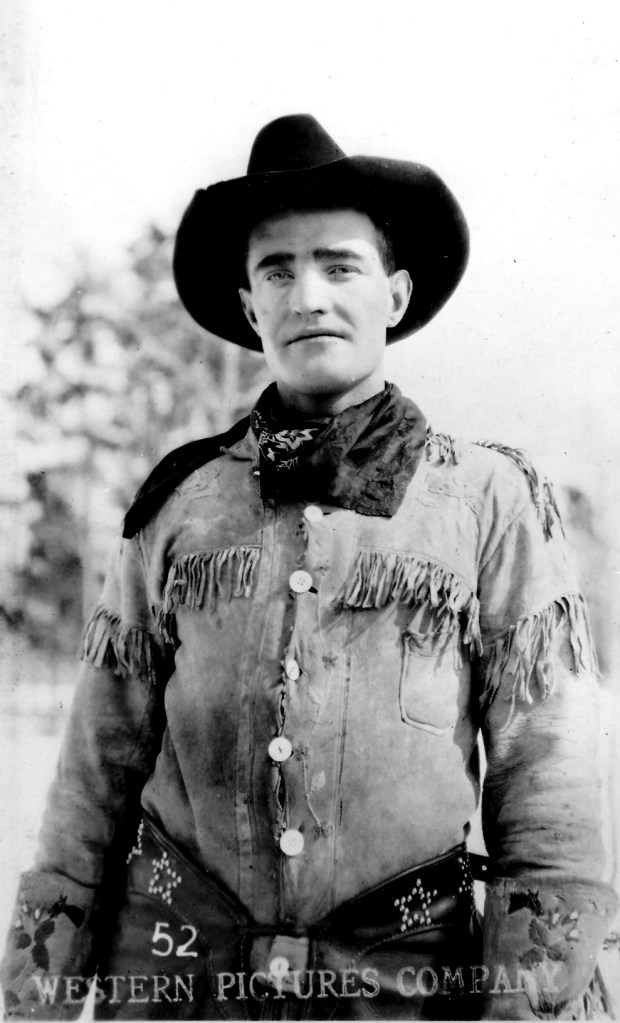
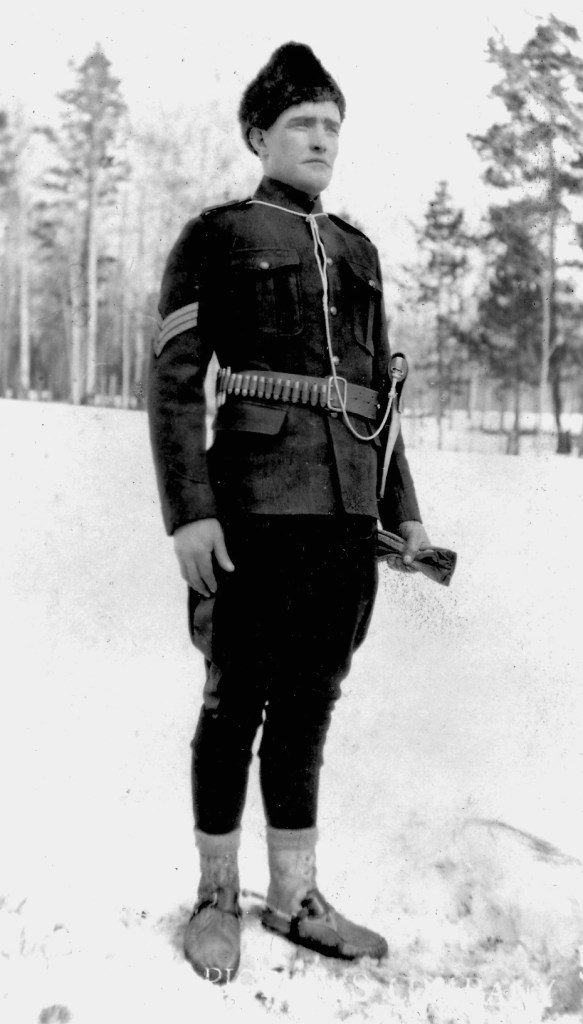
Boyd’s ranch is still in business today, operating as the Flying U Guest Ranch. It was ideal for filming winter wilderness scenes, and could represent a variety of locales shown in the film. A. D. was essentially a one-man film crew. His extant papers include handwritten drafts of two published newspaper articles about the Green Lake filming. The working conditions were brisk, to say the least.
“A. D. (Cowboy) Kean . . . reports that the snow conditions have been rendered ideal by the recent fall of about 6 inches upon the crusted surface of the two feet of winter’s accumulation. The thermometer registers around zero with bright sunshine daily. . . . It is intended that, weather permitting, from four to six days will complete the filming of this part of the picture.”[1]
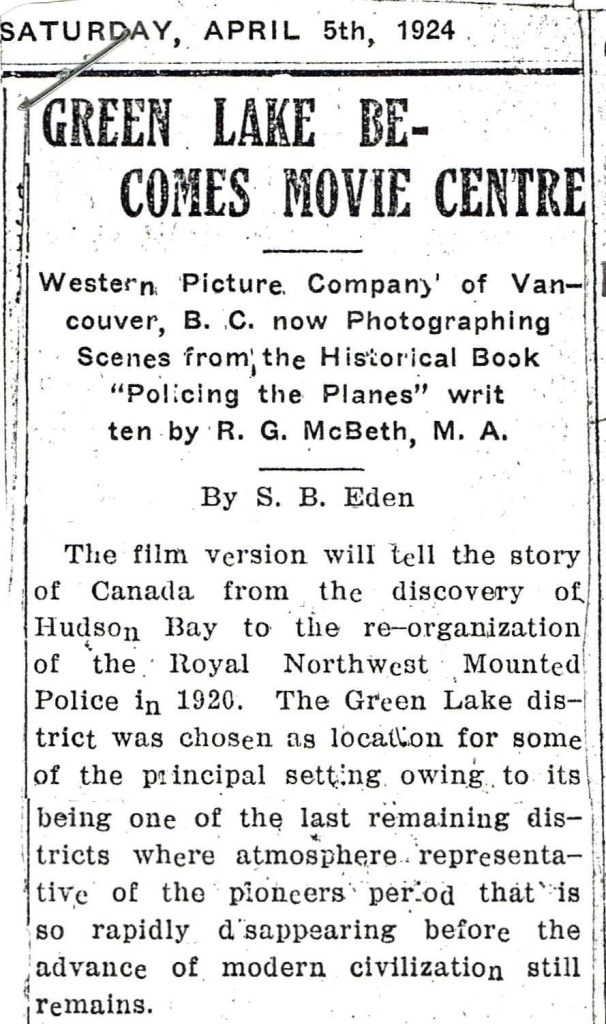
The second news story, written by Kean on April 2, appeared three days later in the Ashcroft Journal. It says that the Green Lake location was selected because it was “one of the last remaining districts where atmosphere representative of the pioneer period . . . still remains.”
“No doubt this is but the commencement of motion picture activities in the Cariboo, as when the many advantages such as light conditions and perfect climate become better known to outside film producers, others will be attracted here.
“The country abounds with wild horses and many varieties of big game, as well as countless lakes that offer the finest of sport to fishermen. Cattle ranches of vast extent run thousands of head of stock upon the ranges. These conditions provide ideal background for either photographer, sportsman or tourist.”[2]
The weeks spent at the Green Lake location were just the beginning of the long odyssey of Policing the Plains. Kean encountered all manner of financial, technical, and logistical problems as he shot seasonally on locations across Canada: Vancouver, Victoria, Banff, southwestern Alberta, Saskatchewan, and Ontario. Ultimately the shooting spanned three-and-a-half years. The completed film finally premiered in Toronto in December 1927, ran for six days, earned middling reviews–and was never screened again. Disillusioned, Kean left filmmaking for good, and pursued new careers in the Toronto area as a journalist, broadcaster, photographer and horseman.
Policing the Plains is a lost film; no negative or print survives. The location shooting at Green Lake is documented only by three newspaper articles and a few photographs. Kean’s feature was a pioneering attempt to establish a truly Canadian film industry, distinct from today’s “Hollywood North” model of merely providing services to visiting American productions.
For more background on A. D. Kean and Policing the Plains, as well as clips from his other films, see This Week in History eps. 25: The Cowboy Cameraman.
NOTES
[1] A. D. Kean, “Mounted Police gets his man” (manuscript), March 30, 1924, Kean papers, box 1 file 6, MS-2456, BC Archives; published as “‛Fugitive’ From Law is Caught,” Vancouver Morning Sun, April 14, 1924.
[2] A. D. Kean, “Green Lake becomes a Movie Center” (manuscript), April 2, 1924, Kean papers, box 1 file 6; published as “Green Lake Becomes Movie Centre,” Ashcroft Journal, April 5, 1924, p. 1.


 Seriously Moving Images
Leave a comment